
When everything moves at the speed of data, a slowdown in responding to a social crisis can be fatal. Especially if the crisis is rooted in religious issues—entities that touch not only the personal spiritual side, but also the deepest communal identities and social affiliations. Therefore, early response is not only a technical need, but also a moral and strategic responsibility of the state.
Indonesia, as a multicultural, multiethnic, and multireligious country, actually has a long history of caring for diversity. But like embers hidden in the chaff of chaff religious tensions remain a latent threat. Data from the Center for Religious Harmony (PKUB) of the Ministry of Religion shows that in 2023 there will be 66 cases of social conflicts with a religious dimension. This figure jumped sharply to 561 cases in just one year, by 2024—an increase of more than 850 percent.
This trend is not just a statistic. For example, cases of rejection of houses of worship in certain areas that trigger unrest in minority communities, or hate speech against certain religious symbols on social media that go viral without filters. Cases like these prove that without early detection and quick treatment, small social friction can become an explosion of conflict.
Early Warning System (EWS)
To answer this challenge, the Ministry of Religious Affairs has designed a new approach through the Early Warning System (EWS), a digital-based early warning system to map, monitor, and anticipate potential socio-religious conflicts in real time. This system is not just a technological innovation, but a reflection on the urgent need to shift the paradigm of conflict handling from responsive to preventive.
These superapp-based EWS allow religious extension workers and other field actors to input data directly from their regions. The data is validated in stages by the Office of the Ministry of Religion of Regencies/Cities to the central level. The system also presents a visual map of vulnerability in the form of a heatmap, which helps policymakers see the dynamics of harmony spatially and dynamically.
This system is connected to public complaint channels through social media, WhatsApp, and the official website. Periodic press releases and online widgets allow the public to be directly involved in the early detection of conflicts in their regions. In other words, EWS is not only a tool for state supervision, but also a vehicle for public participation to maintain harmony together.
But no matter how sophisticated the technology is, the success of EWS depends on an institutional mindset and synergy. Inter-institutional sectoral egos are a classic challenge. As EWS crosses the boundaries of formal authority, cooperation between government units and civil society becomes crucial.
Collaboration and Synergy
In this context, we can refer to Niklas Luhmann’s Social System theory. He emphasized the importance of communication and information as the foundation of an adaptive social response. In modern society, social complexity can only be controlled through information systems that are able to filter and convey signals quickly and accurately. Therefore, EWS is not only a detection system, but also part of the state’s self-referential system in maintaining social stability and community cohesion.
But other challenges remain huge. For example, the limitations of digital literacy of extension workers in 3T areas (frontier, outermost, disadvantaged), concerns about the security of sensitive data, and the limitations of digital devices and infrastructure at the sub-district level. Without attention to the technical and human resources, a good system will just be an empty storefront.
In addition, EWS accountability has not been widely discussed in the public space. The public has the right to know how recommendations are determined, who is responsible when data errors occur, and how monitoring of input validity is carried out. This transparency is important to maintain trust and prevent abuse.
As noted in media analysis, religious issues have increased coverage from 36 online news in 2023 to 65 news in 2024. But ironically, conversations on social media are actually declining. This signals that the conflict is moving more under the surface, without a healthy open public debate. In these conditions, the existence of EWS becomes very relevant as an early radar.
The long-term goal of EWS is not only to prevent major conflicts, but to build a data-driven culture of peace. Religious extension workers, interfaith leaders, and local officials must be able to use this system as a reference in taking preventive steps—from facilitating dialogue to persuasive steps before conflicts escalate.
Protecting Harmony as shared responsibility
However, harmony cannot be built from only one direction. Without the support of civil society, local figures, and ethical media, this system will not work optimally. Therefore, public literacy about harmony, pluralism, and digital ethics must also be a parallel program that is driven together.
Harmony is not just the absence of conflict, but the presence of a sense of security, justice, and equality in religious life. Therefore, the indicator of EWS success is not only the decrease in the number of cases, but also the increase in community participation in maintaining harmony.
With EWS, the Ministry of Religious Affairs seeks to be present early, not when the conflict has grown and left its mark. This hope is in line with the target of the Religious Harmony index (KUB) set by the government, which is to reach a score of 78 in 2029. For this reason, collaborative work between the central and regional governments, between religious leaders and the government, between technology and ethics, must continue to be maintained.
EWS is not a tool that promises zero conflict, but it is a benchmark that countries want to be present earlier, read faster, and act wiser. Because in a pluralistic society like Indonesia, one spark can burn a house together if it is not extinguished immediately.
Harmony is a long-term investment that cannot be built with speech alone. It requires a tested system, broad participation, and cross-border commitment. EWS is one of the efforts towards that great ideal.
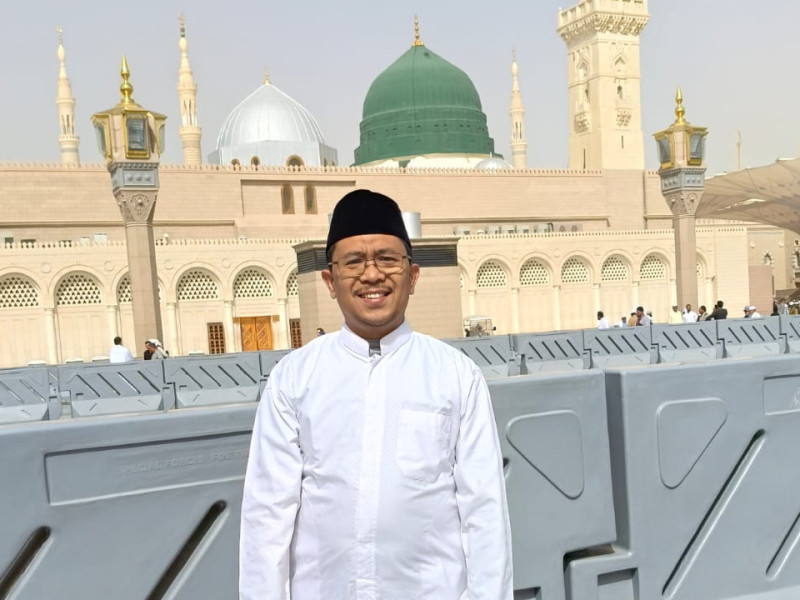
Muhammad Adib Abdushomad, M.Ag., M.Ed., Ph.D (Head of the Center for Religious Harmony, Ministry of Religion of the Republic of Indonesia, and leader of Islamic Boarding School, Pesantren Mahasiswa Madadani Global Citizenship)